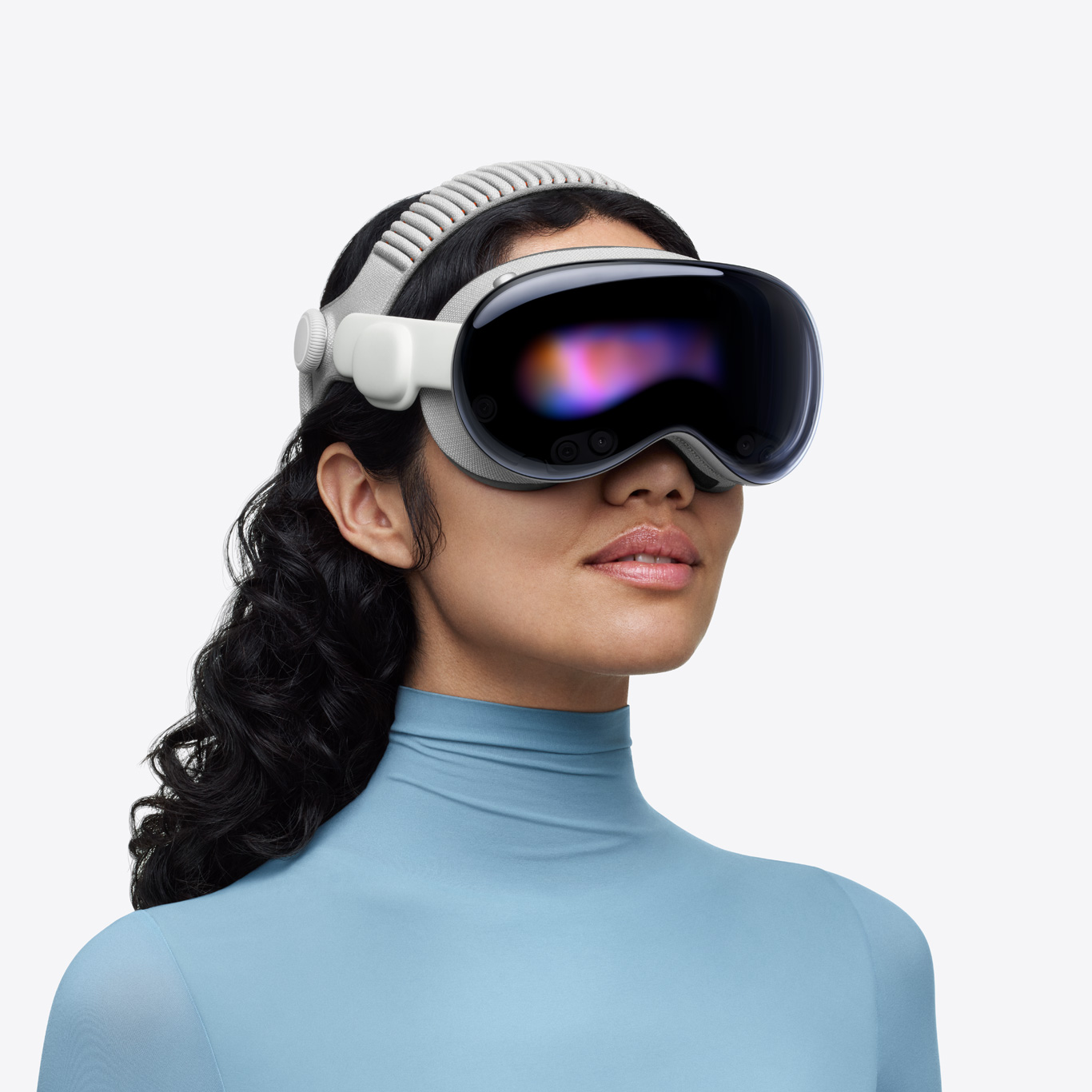
Apple’s latest visionOS developments contain several features that could matter considerably for professional XR—particularly object tracking and connecting immersive software to powerful external computers.
With visionOS 27, Apple is expanding the way Vision Pro applications can understand physical objects and combine local spatial content with demanding visuals streamed from another computer.
Some of the most interesting additions for XR developers have little to do with conventional AI assistants.
Vision Pro gets better at understanding physical objects
Apple says visionOS 27 enhances object tracking with higher-frequency pose updates, enabling applications to react as people pick up and interact with tracked objects in the physical world.
The direction matters because some of the most promising mixed-reality experiences are not about replacing the physical world. They are about understanding it.
A training application, for example, could recognise the position of a physical training object while placing instructions, information or simulated context around it. For enterprise XR, that is an important distinction.
More power does not have to sit inside the headset
Apple is also developing foveated streaming for visionOS. The framework allows an application to present native spatial content alongside demanding immersive content streamed from a remote computer.
Apple’s own example describes a flight simulator in which a cockpit is rendered locally with RealityKit while a processor-intensive landscape is streamed from an external endpoint. A bidirectional messaging system allows the native visionOS app and streaming endpoint to exchange custom data.
That model makes particular sense for engineering, simulation and other applications where a headset may need access to graphics workloads far beyond what an onboard processor can efficiently provide.
Spatial computing becomes less isolated
Taken together, Apple’s direction is interesting. The headset can better understand real objects. Developers can combine immersive environments with external computing. Physical accessories and tracked objects can become part of spatial applications.
The original spatial-computing pitch often looked like moving conventional computing into a headset. visionOS 27 points toward something broader: the headset becoming an interface connecting physical objects, powerful computers and digital environments at the same time.
For training, design and simulation, that may ultimately be the more important evolution.